
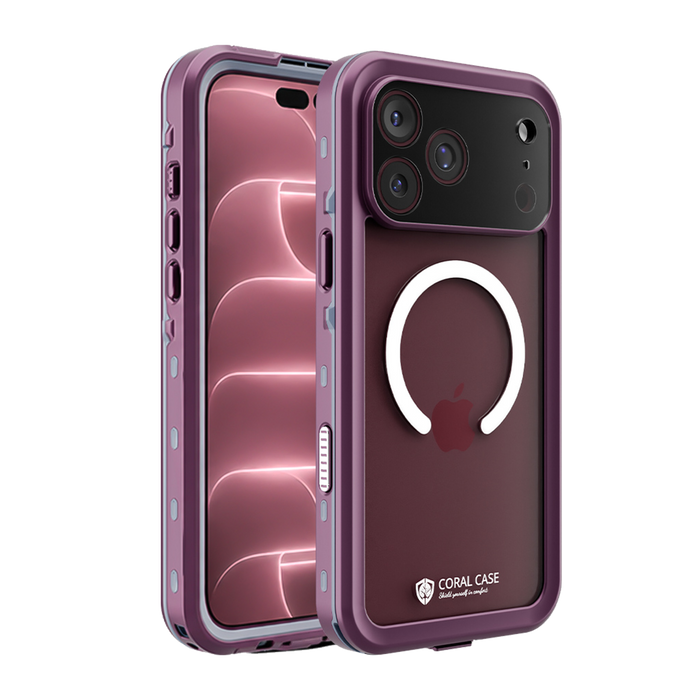
 Apple
Apple
 Samsung
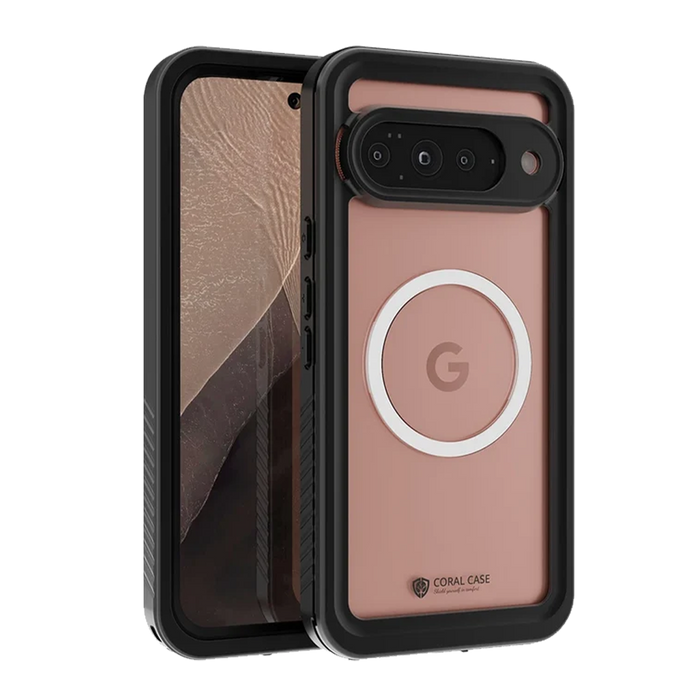
 Google Pixel
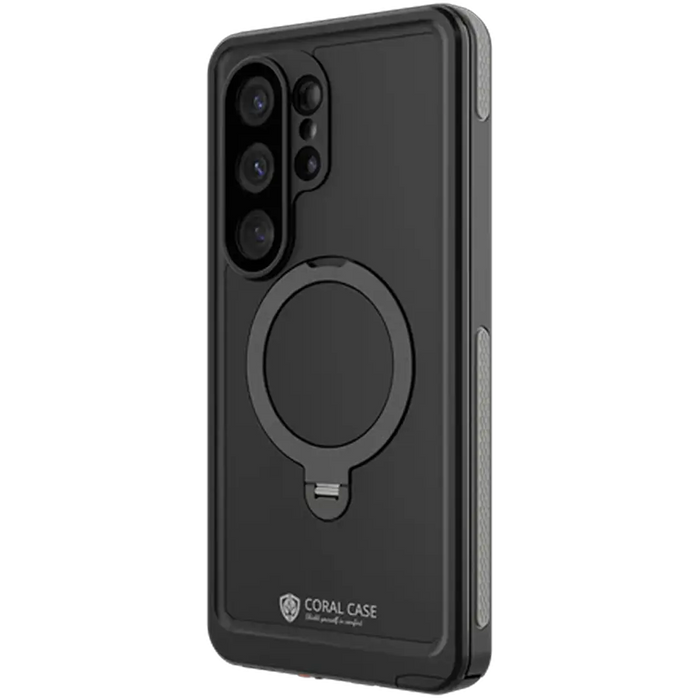


 Samsung

Galaxy S26 Ultra Cases Don't Have to Look Rugged: Style Meets Everyday Protection
Say “shockproof phone case” and it is easy to picture the same familiar design: thick black rubber, oversized corners, heavy edges and a look that suggests the phone is ready for a construction site rather than a café table.
That type of protection still has its place. But it is no longer the only way to protect a premium smartphone.
Modern Galaxy S26 Ultra cases can put additional cushioning where drops are most likely to cause trouble — around the corners, edges and camera area — without making the entire device look like industrial equipment. A case can be slim-looking, colourful, iridescent or understated while still being designed for the bumps, knocks and accidental drops that happen during ordinary life.
And appearance matters more than it might sound.
A phone case is one of the few accessories many people handle dozens of times throughout the day. It sits beside a laptop at work, rests on café tables, appears in photos, rides in a car mount, travels through airports and comes out at dinners, meetings and weekend trips. If you have chosen a premium phone such as the Galaxy S26 Ultra, it is reasonable to want the case around it to feel considered too.
The real question, then, is not style or protection?
It is: how much protection do you actually need, and what do you want that protection to look like?
Why Protective Galaxy S26 Ultra Cases Don't Need to Look Bulky
A Galaxy S26 Ultra case does not have to look oversized to offer meaningful everyday protection. Modern cases can concentrate impact-absorbing materials around vulnerable areas such as the corners, edges and camera surround while keeping the back panel and overall profile visually refined. Protection depends on construction and tested performance, not simply on how thick or rugged a case appears.
Traditional rugged cases often rely on visibly substantial construction. Thick rubber surrounds, deep bezels and chunky corner sections can make the protective purpose obvious before you even pick the phone up.
There is nothing inherently wrong with that approach. Someone working around tools, concrete, heavy machinery or particularly harsh environments may actively prefer a substantial full-body design.
But ordinary daily protection has a different job.
Most users are trying to protect against things such as a phone slipping from a pocket, being knocked off a desk, falling while getting out of the car or taking a bump inside a crowded bag. These are not extreme survival scenarios. They are routine mistakes.
That allows case designers to focus protective engineering where it matters rather than simply increasing thickness everywhere.
Corners are an obvious example. When a phone falls at an angle, one corner may make contact before most of the rest of the case. Building additional cushioning into those four zones can address a common impact point without requiring the entire back panel to become unusually thick.
The same principle applies to camera protection. A raised surround can help keep protruding lenses away from the surface underneath the phone while remaining relatively discreet within the design.
Material combinations matter too.
A flexible outer section can help cushion impact, while a more rigid layer can provide shape and structural support. The user sees a polished finished case, but different materials may be doing different jobs underneath.
That is why looking at a case and deciding “thin means weak” or “thick means strong” is too simplistic.
A slim case with no meaningful corner structure may offer relatively limited impact protection. Another similarly clean-looking case may have deliberate reinforcement around the areas most likely to make contact during a drop.
What matters is the actual design, materials and credible performance claims.
Your Phone Case Can Be Part of Your Personal Style

The Galaxy S26 Ultra is not an accessory that disappears into a drawer after you buy it. It travels with you.
It might be beside a notebook during a morning meeting, on a café table at lunch, attached to a car mount on the drive home and sitting on a kitchen bench that evening. On a weekend, the same phone might move between a restaurant, an airport lounge, a hotel room and a day trip.
The case is visible in all of those settings.
That makes visual design more than a superficial extra.
Some people want their case to almost disappear. A transparent or restrained finish allows the phone itself to remain the main visual feature.
Others prefer the opposite. They want colour, texture, reflective detail or a finish that changes the personality of the device.
Neither approach is more correct.
A case can work in a similar way to a watch strap, laptop sleeve, bag or pair of glasses: it performs a practical function, but because it is seen so frequently, people naturally care about how it looks.
That can mean matching a case to a neutral work bag, choosing colours that sit comfortably with an everyday wardrobe or picking something more decorative because the phone would otherwise feel too plain.
It can also change how a device feels in different settings.
A heavy black rugged shell makes a very specific visual statement. A clear case feels more minimal. A pearlescent finish can make the same phone feel softer and more decorative. Strong geometric corners combined with a colourful rear panel can create something more architectural.
The important point is that personal style and phone protection are not opposing ideas.
The protective elements can exist underneath and around the visual design rather than replacing it.
Why an Abalone-Style Finish Stands Out
Plain plastic is practical, but it is not the only visual language available for a protective case.
An abalone-inspired finish works differently because its appearance depends partly on light.
Instead of presenting one flat colour from every angle, an iridescent surface can shift between pearlescent tones as you move the phone. Natural daylight may bring out brighter ocean-like shades. Light from a café window can create softer reflective highlights. Under warmer indoor lighting, the same surface can look deeper and more polished.
That sense of movement is what gives this type of finish visual depth.
It is less like choosing “blue” or “green” from a colour chart and more like choosing a surface that changes character depending on its surroundings.
On a clean work desk, the reflective back can catch light beside a laptop or monitor. In a modern home interior, it can pick up warmer ambient tones. Outdoors, stronger daylight can reveal more of the contrast between different sections of the pattern.
The attraction is not simply brightness.
Good iridescent design has layers. Pearlescent sections, darker fragments, ocean-inspired tones and polished highlights can break up the visual surface without needing a printed slogan or oversized branding.
That can make a phone case feel intentionally decorative while still keeping its overall form relatively clean.
Coral Case's Galaxy S26 Ultra Abalone Shell Bounce Case uses an iridescent abalone shell design combined with TPU, polycarbonate and epoxy resin construction. Coral Case describes the epoxy-resin layer as sealing the decorative pattern while the TPU and PC components provide cushioning and structural support.
The result is a useful example of why the back of a protective case does not have to look purely functional.
The visible finish can carry the personality. The structure around it can handle the practical work.
Style Still Needs a Protective Foundation
An attractive case still has to function as a case.
That sounds obvious, but decorative designs can sometimes distract shoppers from the questions that matter: What happens around the corners? How is the camera area protected? What materials are being used? Is there any stated drop-protection level? Can the case stay on during charging? Does it interfere with the way the phone is used every day?
A good-looking back panel should be the beginning of the buying decision, not the end of it.
Coral Case's Galaxy S26 Ultra Abalone Shell Bounce Case provides a useful example of how decorative styling can sit over a more functional structure.
According to Coral Case, the case combines TPU, polycarbonate and epoxy resin. The flexible TPU is used as impact-absorbing cushioning, while the PC portion provides more rigid support. The design also uses square bounce corners with 360-degree cushioning and is advertised as tested for drops of up to 1.5 metres.
That distinction matters.
It means the visual finish is not being asked to perform every job.
The decorative rear surface creates the appearance. The structural materials and corner design address everyday impact.
Coral Case also lists raised camera edges, a built-in magnetic ring, wireless charging support, access to buttons, ports and speakers, a slim-profile design and a 12-month manufacturer's warranty.
None of those features makes a phone impossible to damage.
No responsible case description should promise that.
Instead, they show how a modern everyday case can be designed around multiple small problems at once: a drop from hand height, a camera lens touching a table, a phone moving around inside a bag, or the inconvenience of removing a case every time you want to use a magnetic accessory.
That is the real foundation beneath the styling.
How Bounce-Corner Protection Helps With Everyday Drops
Bounce corners are reinforced or cushioned corner sections designed to help absorb and spread some of the force generated when a phone lands on a corner. Because phones frequently fall at an angle rather than perfectly flat, concentrating additional protection around the corners can improve everyday drop protection without requiring the entire case to become equally bulky.
Watch a phone fall and the landing is rarely neat.
It may rotate on the way down and hit one corner first. It might clip the edge of a desk before reaching the floor. It could slide from a jacket pocket, bounce from a car seat or slip while being taken out of a handbag.
That unpredictability is exactly why corners are important.
When one small part of a phone makes contact first, the impact is concentrated in that area. The corner of the case becomes the first line between the phone and the surface underneath it.
A bounce-style design increases the protective structure around those points.
Rather than simply creating a uniformly thick case, it adds shape and cushioning to the corner zones. The intention is to absorb and distribute some impact energy through the case structure instead of allowing the phone itself to take the full initial hit.
Coral Case states that its S26 Ultra Abalone Shell Bounce Case uses square bounce corners with 360-degree epoxy-resin shock-resistance cushioning and is tested for drops up to 1.5 metres.
That specification should be understood in context.
A 1.5-metre drop rating makes sense for typical everyday accidents: slipping from a hand while standing, falling from a desk, dropping while stepping out of a vehicle or knocking the phone from ordinary furniture.
It is not the same thing as saying the case is intended for extreme industrial impacts or that damage can never occur.
Surfaces differ. Angles differ. The object the phone strikes may be uneven. A case that performs well in one type of fall cannot make every possible accident identical.
That is why the most useful way to think about bounce corners is not “invincible phone”.
It is targeted protection for one of the most common ways a phone can hit the ground.
For many users, that is exactly the level of protection they are looking for.
They do not want to transform the S26 Ultra into a heavy-duty field device. They want extra cushioning for ordinary mistakes while keeping the phone comfortable enough to carry all day.
Camera Protection Matters Without Making the Case Look Heavy
The rear camera area is another place where intelligent case design can make a noticeable difference without adding bulk everywhere else.
Modern smartphone lenses protrude from the rear of the handset. That means placing the phone down on a hard surface can bring the camera area close to whatever is underneath it.
A raised camera surround changes that relationship.
Instead of allowing the outermost lens area to become the first point of contact, the case creates a slightly higher protective boundary around it.
Coral Case lists raised edges around the camera lenses on its Abalone Shell Bounce Case.
This is a small design decision, but it illustrates the wider principle behind stylish protection.
You do not necessarily need a huge camera guard that visually dominates the entire back of the device. Protection can be integrated into the shape of the case so it remains part of the overall design.
That is particularly relevant with a decorative finish.
A visually detailed back would lose much of its effect if every practical feature looked bolted on afterwards. A better approach is to make protective geometry part of the aesthetic from the beginning.
Raised camera edges, structured corners and a slim rear profile can work together without making the case look like a collection of separate protective components.
And, as with drop protection, the wording matters.
A raised edge can help reduce direct surface contact. It should not be treated as a guarantee that a camera lens could never crack in any accident.
Good protection reduces exposure. It does not remove every possible risk.
MagSafe Compatibility Makes a Stylish Case More Practical
A stylish case becomes much easier to live with when it can stay on the phone during charging, mounting and accessory use. A Galaxy S26 Ultra case with an integrated magnetic ring can provide compatibility with suitable magnetic chargers, car mounts, stands, wallets or grips without requiring the user to remove the case for those everyday tasks.
Visual design might attract you to a case, but practical compatibility is what determines whether you still enjoy it months later.
A case that looks excellent but constantly needs to be removed creates friction.
You place the phone in a magnetic car mount every morning, but the case does not connect securely. You want to use a wireless charger beside the bed, but the case gets in the way. You use a magnetic stand for video calls, yet the case has no integrated magnetic support.
Those small inconveniences add up.
That is why magnetic compatibility matters on an everyday Galaxy S26 Ultra case.
Coral Case incorporates a built-in magnetic ring into its Abalone Shell Bounce Case and lists compatibility with MagSafe accessories as well as wireless charging support.
The wording is important here.
The case is MagSafe-compatible through its magnetic ring. That is different from suggesting that the Galaxy S26 Ultra itself is an Apple MagSafe device.
The practical advantage is accessory connection.
At your desk, you might place the phone onto a compatible magnetic wireless charger. In the car, the same ring can connect to a compatible magnetic mount. At home, a magnetic stand can hold the device upright while you watch a video or follow a recipe. A compatible wallet or finger grip can be attached when needed and removed when it is not.
This helps a stylish case remain useful instead of becoming something you tolerate for appearance alone.
A good daily case should fit into the way the phone is already used.
Protection You Don't Have to Think About Every Day
Some protective cases make their presence obvious every time you touch the phone.
They can be difficult to remove, awkward to fit into a pocket or so specialised that they feel better suited to an occasional outdoor trip than Monday-to-Friday use.
Everyday protection should be quieter.
You should still be able to reach the side buttons without searching for them. Charging should remain straightforward. Speaker and port openings should be accessible. The camera should be ready when you pull the phone from your pocket to take a quick photo.
Coral Case lists precision access to buttons, ports and speakers on the Abalone Shell Bounce design, along with snap-on installation and wireless charging support.
Those features do not sound as dramatic as a drop rating, but they may matter more over twelve months of ownership.
A phone case is touched constantly.
If it makes ordinary tasks inconvenient, people become more likely to remove it. Once that happens, all of its theoretical protective features stop helping.
That is why comfortable daily usability belongs in the same conversation as shock protection.
A case intended for everyday users should work at the office, in the car, on public transport, at a restaurant and during weekend travel without demanding special treatment.
Protection is most useful when it becomes part of the device rather than a piece of equipment you are continually thinking about.
How to Match Your Galaxy S26 Ultra Case to Your Personal Style
Choosing a case is easier when you stop asking which design is universally “best”.
There is no single correct aesthetic.
A better approach is to think about what you already carry, where your phone spends most of its time and how visible you want the case to be.
Minimal and understated
If you chose the Galaxy S26 Ultra partly because you like the handset's original design, you may want the case to interfere with that look as little as possible.
Transparent or visually restrained cases work well here.
They allow more of the handset to remain visible while adding edge and corner protection around it.
This approach also suits a clean desk setup or people who frequently change other accessories and want the phone case to remain neutral.
Iridescent and expressive
An abalone-inspired design sits at the opposite end of the visual spectrum.
Instead of trying to disappear, it adds depth, reflected colour and movement.
The attraction is how the case changes slightly with lighting and angle. A cool highlight in daylight may become warmer indoors. Pearlescent sections can catch the light differently as you turn the phone in your hand.
For someone who sees their case as part of an outfit or everyday accessory set, that variation can be more interesting than a single flat colour.
Practical everyday styling
Style does not always mean making the phone visually loud.
Sometimes it simply means choosing something that fits comfortably with the objects around it.
Think about the bags you carry most often. Your laptop. Your watch strap. Your desk accessories. The colours you typically wear.
A case that fits naturally with those things may feel more considered than one chosen entirely in isolation.
Accessory-led styling
The accessories attached to the case can become part of the appearance too.
A magnetic grip changes both how the phone feels in your hand and how the back looks. A slim wallet makes the device more functional for short outings. A magnetic stand can turn the phone into a small desktop display.
If you regularly use these products, choose the case and accessories as a system rather than treating them as unrelated purchases.
Three questions are particularly useful:
Do I enjoy looking at it?
Does it protect against the accidents I realistically have?
Does it work with the accessories I use every day?
If a case answers all three well, it is probably a better fit than one that wins purely on appearance or purely on specifications.
Stylish vs Rugged Isn't the Right Question
Phone cases are often presented as a choice between two extremes.
On one side: something thin, colourful and fashionable.
On the other: something thick, dark and heavily reinforced.
Real buying decisions are more nuanced.
Someone working around construction equipment, plumbing, fine dust, water or hard industrial surfaces may genuinely need a substantially rugged or fully sealed design.
The visual bulk is not wasted in that situation. It reflects a different risk profile.
Someone whose week mainly involves commuting, offices, cafés, shopping, university, restaurants and weekend travel is dealing with another set of risks.
Their phone can still fall.
It can still be knocked from a table.
The camera can still touch a hard surface.
The device can still slip while being taken from a pocket or bag.
But that person may reasonably prefer a slimmer Galaxy S26 Ultra protective case with reinforced corners rather than a fully sealed enclosure.
That is where Bounce-style cases make sense.
They occupy the space between an ultra-thin cosmetic shell and a heavier-duty rugged design.
The user gets a more expressive appearance and relatively slim everyday feel while still gaining structural protection around areas such as the corners and camera.
Neither style is automatically superior.
The better choice depends on what your phone actually goes through.
Ask “What type of protection do I need?” before asking “Which case looks toughest?”
Once that is clear, choosing the visual design becomes much easier.
Where Coral Case Fits Into the Style-and-Protection Approach
Coral Case's current S26 Ultra range illustrates how different cases can address different lifestyles instead of forcing every user into one design.
The collection includes Abalone Shell Bounce and Transparent Bounce options alongside more substantial full-body waterproof cases.
That gives shoppers a useful spectrum.
If your main concerns are everyday drops, scratches, camera contact and maintaining a slimmer appearance, a Bounce case may be the more natural fit.
If your environment involves more regular water, dust, dirt or harsher outdoor exposure, a full-body waterproof case addresses a different set of risks.
You can explore Coral Case's range of Galaxy S26 Ultra cases to compare those approaches.
This is a better way to shop for protection than simply looking for whichever product appears largest or has the most rugged-looking photograph.
The visual design should suit you.
The level of protection should suit your environment.
And the everyday features should suit how you actually use the phone.
What Should You Look for in a Stylish Galaxy S26 Ultra Case?
A stylish protective case should be evaluated on more than its colour or pattern. Look at how the corners are constructed, whether drop-protection claims are clearly stated, how the camera area is raised, how bulky the case is, what materials are used and whether magnetic accessories and wireless charging remain practical. Appearance should complement those fundamentals rather than replace them.
When comparing cases, this checklist can help:
-
Corner construction: Look for deliberate reinforcement or cushioning where corner-first impacts are likely to occur.
-
Drop-protection information: Prefer specific, understandable performance claims over vague words such as “tough” or “rugged”.
-
Camera-edge protection: A raised surround can help reduce direct contact between the lenses and flat surfaces.
-
Overall profile: Consider how much thickness and weight you genuinely want to carry every day.
-
Finish and materials: Think about both appearance and how the material combination contributes to structure and cushioning.
-
Grip and handling: A beautiful case is less useful if it feels awkward or unnecessarily slippery in daily use.
-
Button and port access: Everyday usability matters as much as protection.
-
Magnetic accessory compatibility: If you use car mounts, grips, stands or wallets, check that the case is designed to work with compatible magnetic accessories.
-
Wireless charging: Confirm that the case can remain fitted during the type of wireless charging you normally use.
-
Warranty: A clearly stated manufacturer's warranty can be useful when comparing similar products.
-
Visual style: Finally, choose something you will actually enjoy seeing and carrying for the life of the phone.
The goal is not to maximise every specification.
It is to create the right balance.
A person who works outdoors six days a week may accept significantly more bulk because environmental protection is the priority.
A commuter whose biggest concern is a phone slipping onto the station platform may prioritise good corner protection and a slimmer profile.
A frequent driver might place magnetic mounting higher on the list.
Someone who sees their phone as part of their personal style may give finish and colour more importance than another buyer.
That is what makes “best case” recommendations so difficult without context.
The most suitable case depends on the person using it.
Why Everyday Protection Can Be More Important Than Extreme Protection
Marketing around phone cases often focuses on dramatic accidents.
Extreme drops. Harsh landscapes. Huge splashes. Dust clouds.
Those visuals make a point quickly, but they can distract from the smaller incidents that are far more common.
Think about how phones are really damaged.
A handset slides from the edge of a kitchen bench.
Someone stands up at a café and knocks their phone from the table.
It slips while being removed from a jacket pocket.
A bag is placed down harder than expected.
The phone falls between a car seat and the door.
The camera area scrapes across a desk while the phone is moved.
These are ordinary moments.
They are also the situations where targeted protection is most relevant.
A case does not need to look ready for an expedition if your risk is a 1-metre fall from a desk.
It needs cushioning where the phone is likely to strike, enough structure to stay securely fitted and a raised boundary around vulnerable surfaces.
That is why the Coral Case Bounce approach is easier to understand when viewed as everyday impact management, not extreme ruggedisation.
Coral Case's advertised 1.5-metre drop protection puts a specific number around that everyday positioning rather than leaving “shockproof” as an undefined marketing term.
Why Style Can Encourage People to Keep Their Case On
There is another practical benefit to making protective cases attractive: people may simply be more willing to use them.
A technically impressive case offers no protection while sitting in a drawer.
If someone dislikes how bulky or industrial a case looks, they may remove it for social events, travel, photographs or simply because they prefer the appearance of the bare handset.
A case that feels visually compatible with the person's style removes some of that tension.
They are less likely to feel that protection means hiding the phone behind something they do not enjoy.
This does not mean appearance should override engineering.
It means good industrial design should consider both.
Phones themselves are carefully designed objects. Their shape, finish and colour matter to buyers. It is logical that people also care about the object that covers the phone for most of its usable life.
An expressive protective case acknowledges that reality.
The Abalone Shell design is a good example because the protective details — square corners, camera surround and magnetic ring — are part of a case that is deliberately decorative.
The case does not pretend to be invisible.
Its appearance is one of the reasons to choose it.
Magnetic Compatibility Is Also a Style Decision
Magnetic accessories are practical, but they also change how a phone is personalised.
A removable ring grip can add comfort without permanently altering the case.
A magnetic wallet can create a cleaner setup for a short trip when you do not want to carry a larger wallet.
A stand can turn the phone into a small display at a desk.
A car mount keeps the device positioned without adding a permanent mechanical bracket to the case.
Because these accessories can be attached and removed, the same Galaxy S26 Ultra case can adapt to different parts of the day.
You might use the phone bare-backed at work, attach a stand at home and connect it to a car mount during the drive between them.
That flexibility is particularly useful for people who want a visually distinctive case but do not want it permanently loaded with extra hardware.
Coral Case's integrated magnetic ring is designed to support that kind of accessory use while the case remains fitted.
Again, compatibility should be checked with the specific charger or accessory you plan to use.
“Magnetic compatible” does not mean every accessory from every manufacturer will behave identically.
Can a Stylish Galaxy S26 Ultra Case Really Offer Drop Protection?
Yes — provided the case has actual protective construction behind its appearance.
Style is not a material property.
An iridescent pattern does not automatically make a case weak, just as a black rubber finish does not automatically make one strong.
The meaningful questions are underneath the finish.
How are the corners built?
What materials surround the phone?
How does the case fit?
Is the camera area raised?
Has the manufacturer stated a specific drop-protection level?
Those factors are more useful than judging performance from appearance alone.
With the Coral Case Abalone Shell Bounce Case, the protective claims are built around the combination of TPU, PC, epoxy resin, reinforced square corners and an advertised 1.5-metre drop rating.
That makes it easier to evaluate the product for what it is: a decorative everyday protective case rather than a cosmetic shell with no stated impact features.
What Are Bounce Corners on a Phone Case?
Bounce corners are enlarged or reinforced areas around the four corners of a phone case.
Their purpose is to provide additional cushioning at locations that commonly take the first impact during a fall.
Instead of making the entire case uniformly thick, the design concentrates more material or impact structure at those points.
The name “bounce” describes the protective concept rather than suggesting that a phone should literally be dropped or bounced.
The intended benefit is impact absorption and distribution.
For everyday users, this design approach is attractive because it can provide visible corner reinforcement while allowing the central back panel to remain comparatively sleek.
It is one example of how a case can look distinctive without adopting the appearance of a traditional heavy-duty shell.
Can the Galaxy S26 Ultra Use MagSafe-Compatible Cases?
Yes, a Galaxy S26 Ultra case can include a built-in magnetic ring designed to work with compatible magnetic accessories.
The important distinction is that the case provides the magnetic attachment system.
That can allow the phone to connect to suitable magnetic chargers, stands, grips, wallets and car mounts while the case remains fitted.
Coral Case lists its Abalone Shell Bounce Case as MagSafe compatible and states that it supports wireless charging.
When choosing accessories, it is still sensible to check compatibility with the specific charger, mount or wallet being used.
Final Verdict — You Can Protect the S26 Ultra Without Hiding Its Personality
Protecting a Galaxy S26 Ultra does not automatically mean surrounding it with thick black rubber.
That approach is useful for some environments, but everyday protection can be more targeted.
Reinforce the corners where angled drops often land. Add a raised boundary around the camera area. Use materials that combine cushioning with structure. Keep charging, buttons and magnetic accessories convenient.
Once those fundamentals are covered, the visible design has room to be much more expressive.
That is why an abalone-style Bounce Case makes sense as a middle-ground option.
It does not try to imitate a heavy-duty waterproof enclosure. Instead, it combines a visually dimensional iridescent back with square bounce corners, raised camera protection, an advertised drop rating of up to 1.5 metres, a built-in magnetic ring and wireless charging compatibility.
For someone whose main concerns are ordinary drops, desk-height accidents, scratches, camera contact and everyday accessory use, that combination may be more appealing than either extreme: an ultra-thin decorative shell with minimal protective engineering, or a much heavier case designed for harsher conditions.
Style and protection are not opposite ends of the same scale.
The better goal is to choose the right protection level, then find the design within that category that feels like yours.
If you want to compare colourful Bounce designs with clearer or more rugged alternatives, browse Coral Case's Galaxy S26 Ultra cases and choose according to how and where you actually use your phone.
Frequently Asked Questions
Can a slim Galaxy S26 Ultra case still be protective?
Yes. A relatively slim case can still offer meaningful everyday protection when it uses suitable materials, reinforced corners, raised camera edges and a secure fit. Thin appearance alone does not determine impact performance. Always check the specific construction and any stated drop-protection rating rather than assuming that all slim cases provide the same protection.
What are bounce corners?
Bounce corners are reinforced or cushioned sections positioned around the four corners of a case. They are designed to help absorb and distribute force when a phone lands corner-first. This allows additional protection to be concentrated in high-risk impact zones rather than making the entire case unnecessarily thick.
How much drop protection does the Coral Case Abalone Shell Bounce Case provide?
Coral Case advertises the Galaxy S26 Ultra Abalone Shell Bounce Case as tested for drops of up to 1.5 metres. It uses square bounce corners and 360-degree cushioning as part of its everyday impact-protection design.
Does the Abalone Shell Bounce Case support magnetic accessories?
Yes. Coral Case states that the case includes a built-in magnetic ring and is compatible with suitable MagSafe-style magnetic accessories, including compatible chargers, car mounts, wallets and stands. Compatibility can vary between individual third-party accessories.
Can I wirelessly charge the Galaxy S26 Ultra with the case fitted?
Coral Case lists wireless charging support for the Galaxy S26 Ultra Abalone Shell Bounce Case, so the case is designed to remain fitted while using compatible wireless charging equipment. No specific charging-speed claim should be assumed beyond the published product specifications.
Does the case protect the Galaxy S26 Ultra cameras?
The Coral Case Abalone Shell Bounce Case uses raised edges around the camera area to help reduce direct contact between the lenses and surfaces underneath the phone. Raised protection can reduce everyday exposure to scratches and impacts, although no case can guarantee that camera damage is impossible in every accident.
Is an Abalone Shell Bounce Case bulky?
Coral Case positions its Galaxy S26 Ultra Abalone Shell Bounce Case as maintaining a slim profile while incorporating reinforced square corners and impact cushioning. It is designed as an everyday Bounce-style case rather than the type of fully sealed heavy-duty enclosure used for more extreme environmental protection.
Should I choose a Bounce Case or a full-body rugged case?
Choose according to your environment. A Bounce Case makes sense when your priorities are everyday drops, corner protection, camera protection, style and magnetic convenience. A heavier full-body or waterproof case may be more appropriate if your phone regularly encounters water, heavy dust, dirt or harsher working conditions.


