
 Apple
Apple
 Samsung
 Google Pixel


 Samsung

iPhone 16 Pro Max vs iPhone 18 Pro Max: What Changed?
Two years can be a long time in smartphone development, but it does not automatically make an older flagship obsolete. That is exactly what makes the iPhone 16 Pro Max vs iPhone 18 Pro Max comparison interesting. Apple’s 2024 flagship is still a highly capable phone with a 6.9-inch ProMotion display, A18 Pro processor, titanium design and a versatile triple-camera system. The iPhone 18 Pro Max keeps the same basic 6.9-inch screen size but changes considerably underneath and around it.
Apple has moved from titanium to an aluminium unibody, increased outdoor display brightness, introduced the A20 Pro processor and a redesigned cooling system, expanded memory, redesigned the telephoto camera, added variable aperture to the Main camera, upgraded the front camera and substantially increased its official battery-life rating.
There are also areas where the two phones remain surprisingly close. Both have 120Hz ProMotion OLED displays at the same resolution, Face ID, an Action button, Camera Control, USB-C with USB 3, MagSafe charging and an IP68 water-resistance rating.
So, does moving from an iPhone 16 Pro Max to an iPhone 18 Pro Max make sense for an Australian user? The answer depends less on the age difference and more on what you actually do with your phone.
At the time of writing on 16 September 2026, the iPhone 18 Pro Max is available for pre-order in Australia, with general availability beginning on 18 September. Apple lists it from RRP A$2,299 including GST.
iPhone 16 Pro Max vs iPhone 18 Pro Max Specs at a Glance
| Specification | iPhone 16 Pro Max | iPhone 18 Pro Max |
|---|---|---|
| Introduced | 2024 | 2026 |
| Australian starting price | A$2,149 launch RRP | A$2,299 current starting RRP |
| Display | 6.9-inch Super Retina XDR OLED | 6.9-inch Super Retina XDR OLED |
| Resolution | 2868 × 1320, 460 ppi | 2868 × 1320, 460 ppi |
| Refresh rate | ProMotion up to 120Hz | ProMotion up to 120Hz |
| Outdoor peak brightness | 2,000 nits | 3,000 nits |
| Front protection | Latest-generation Ceramic Shield | Ceramic Shield 2 |
| Processor | A18 Pro | A20 Pro |
| CPU | 6-core | 6-core |
| GPU | 6-core | 7-core with Neural Accelerators |
| Neural hardware | 16-core Neural Engine | Dual 16-core Neural Engine |
| RAM* | 8GB | 12GB |
| Storage | 256GB, 512GB, 1TB | 256GB, 512GB, 1TB, 2TB |
| Main camera | 48MP, 24mm, f/1.78 | 48MP, 24mm, variable f/1.48–f/4.0 |
| Ultra Wide | 48MP, 13mm, f/2.2 | 48MP, 13mm, f/2.2 |
| Telephoto | 12MP 5x, 120mm | 48MP 4x, 100mm; 12MP 8x optical-quality |
| Maximum photo digital zoom | 25x | 40x |
| Front camera | 12MP TrueDepth | 18MP Center Stage |
| Video | Up to 4K Dolby Vision 120 fps | Up to 4K Dolby Vision 120 fps |
| Video playback | Up to 33 hours | Up to 43 hours |
| Streamed video | Up to 29 hours | Up to 38 hours |
| Wired fast charge | 50% in around 30 min | 50% in around 15 min |
| MagSafe | Up to 25W | Up to 25W |
| Qi2 | Up to 15W | Up to 25W |
| Wi-Fi | Wi-Fi 7 | Wi-Fi 7 with Apple N1 |
| Bluetooth | 5.3 | 6 |
| Water resistance | IP68, 6m/30 min | IP68, 6m/30 min |
| Biometrics | Face ID | Face ID |
| Build | Titanium design | Aluminium unibody |
| Dimensions | 163 × 77.6 × 8.25mm | 163.4 × 78 × 8.75mm |
| Weight | 227g | 249g |
| Colours | Black, White, Natural, Desert Titanium | Black, Silver, Glacier, Burgundy |
| USB-C | USB 3 up to 10Gbps | USB 3 up to 10Gbps |
*Apple does not publish iPhone RAM figures in its consumer technical specifications. The 8GB and 12GB figures have been independently identified from Apple’s Xcode developer files.
The Biggest Differences in Simple Terms
The iPhone 18 Pro Max is not simply an iPhone 16 Pro Max with a faster chip.
The most immediately visible change is construction. Apple has replaced the 16 Pro Max’s titanium design with an aluminium unibody and Ceramic Shield rear surface. The newer phone is also thicker and 22g heavier.
Its screen remains 6.9 inches and retains the same 2868 × 1320 resolution, but outdoor peak brightness increases from 2,000 to 3,000 nits. Apple has also added an antireflective coating and reduced the size of the Dynamic Island.
Inside, the A18 Pro gives way to the A20 Pro, while independently reported RAM increases from 8GB to 12GB. The 18 Pro Max also introduces Apple’s C2 cellular modem and N1 wireless networking chip.
Photography changes more substantially. The old 12MP 5x telephoto is replaced by a higher-resolution 48MP 4x telephoto that can also provide an 8x optical-quality crop. The Main camera gains variable aperture, and the selfie camera rises from 12MP to an 18MP Center Stage system.
Battery life and charging may be even more noticeable in everyday ownership. Apple rates the newer model for 43 hours of video playback versus 33 hours on the 16 Pro Max, while compatible wired charging reaches 50 per cent in around 15 minutes instead of around 30 minutes.
Design and Build Quality: Titanium vs Aluminium
The iPhone 16 Pro Max arrived with a titanium exterior, latest-generation Ceramic Shield front and textured matt glass back. At 227g, it was already a large phone, but the use of titanium helped Apple control weight while retaining the premium feel expected of a Pro model.
The iPhone 18 Pro Max takes a different engineering approach. Apple now uses an aluminium unibody, Ceramic Shield 2 on the front and Ceramic Shield on the rear. The visual effect is different, but the material change should not be simplified to “titanium is stronger, therefore the older phone is tougher”.
A phone is a complete structure. Frame geometry, internal reinforcement, glass design, thermal management and how forces travel through the chassis all affect durability.
One reason aluminium can be attractive in a high-performance device is thermal conductivity. Apple has paired the new body architecture with a next-generation vapour chamber and redesigned A20 Pro package, with a focus on moving heat away from the processor during sustained workloads.
The 16 Pro Max was no thermal disaster. Apple said its revised internal architecture improved heat dissipation and sustained performance compared with its predecessors. The 18 Pro Max simply pushes further in this direction.
In the hand, some users may still prefer titanium. The older model is meaningfully lighter, and its textured matt finish has a distinctly different character from the aluminium 18 Pro Max.
Size, Dimensions and Weight
Both phones are marketed as 6.9-inch devices, but their bodies are not interchangeable.
The iPhone 16 Pro Max measures 163mm high, 77.6mm wide and 8.25mm thick. It weighs 227g.
The iPhone 18 Pro Max increases those measurements to 163.4mm high, 78mm wide and 8.75mm thick, with weight rising to 249g.
That additional 22g does not look dramatic on a specification sheet, but it represents roughly a 9.7 per cent increase in weight.
You are more likely to notice it during a long phone call, extended gaming session or when holding the phone above your face while streaming. Add a full-body protective case and the total package becomes heavier again.
The dimensional differences also matter for accessories. An iPhone 16 Pro Max case should not be assumed to fit the iPhone 18 Pro Max. Apart from body dimensions, camera geometry and surrounding hardware have changed.
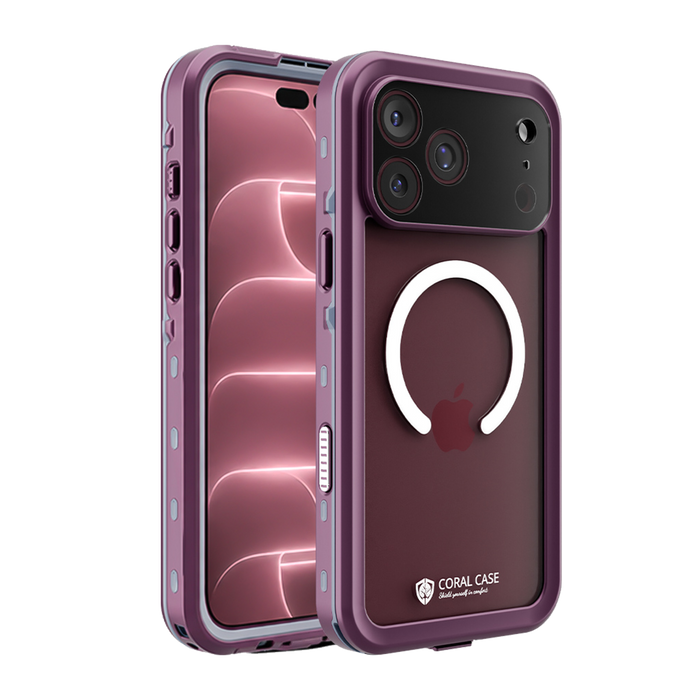
Coral Case maintains separate Australian collections for iPhone 16 Pro Max waterproof cases and iPhone 18 Pro Max waterproof cases, reflecting the need for model-specific alignment around cameras, controls, charging ports and edges.
Display Comparison
On headline specifications, the displays look almost identical.
Both are 6.9-inch Super Retina XDR OLED panels with a resolution of 2868 × 1320 at 460 pixels per inch. Both offer an Always-On display, HDR, True Tone, P3 wide colour, Haptic Touch and ProMotion with adaptive refresh rates up to 120Hz.
That means upgrading does not give you a larger screen or a jump to a 144Hz panel.
The major practical improvement is brightness.
The iPhone 16 Pro Max reaches 1,000 nits typical brightness, 1,600 nits for HDR and 2,000 nits outdoors. The 18 Pro Max keeps the same 1,000-nit typical and 1,600-nit HDR figures but increases outdoor peak brightness to 3,000 nits.
That 50 per cent higher outdoor ceiling could matter considerably in Australia. Viewing Maps in strong midday light, checking a camera composition at the beach, reading messages outdoors or using the phone on a bright work site should be easier.
The newer display also includes an antireflective coating, potentially reducing some of the glare competing with the panel.
Ceramic Shield Protection
The 16 Pro Max uses what Apple called its latest-generation Ceramic Shield, while the 18 Pro Max moves to Ceramic Shield 2 and also uses Ceramic Shield on the rear.
Stronger cover materials are useful, but no glass-fronted smartphone should be considered scratch-proof or drop-proof. Concrete, rocks, sand and direct edge impacts can still damage a flagship screen.
For users working outdoors or regularly taking a phone around water, tools or hard surfaces, a screen protector or full-body case remains sensible regardless of generation.
Dynamic Island and Front Design
Apple retains the Dynamic Island on the iPhone 18 Pro Max, so there is no completely uninterrupted display.
What changes is its size. Apple specifically describes the new Pro models as having a smaller Dynamic Island while retaining its role for alerts, Live Activities and background information.
The reduction may make the display feel less interrupted, particularly when watching video or working in full-screen apps, but it is more refinement than fundamental redesign.
Face ID also remains present. Apple has not replaced it with Touch ID or an under-display fingerprint sensor.
Performance: A18 Pro vs A20 Pro
The iPhone 16 Pro Max uses the A18 Pro, built around a six-core CPU, six-core GPU and 16-core Neural Engine.
For ordinary work in 2026, it remains extremely capable. Messaging, Safari, banking, social apps, navigation, photography and mainstream games do not suddenly become slow simply because a newer processor exists.
The iPhone 18 Pro Max uses the A20 Pro. It has a six-core CPU, seven-core GPU with Neural Accelerators, a Dual 16-core Neural Engine and hardware-accelerated ray tracing. Apple is placing increased emphasis on AI workloads, graphics performance and sustained processing rather than simply making apps open a fraction of a second faster.
This matters most for heavy workloads: high-end gaming, video exports, computational photography, local AI models and more demanding versions of Apple Intelligence and Siri AI.
The newer chip should also have a longer runway for increasingly demanding software. But buyers should be realistic: an A18 Pro owner who spends most of the day in Mail, Safari, Messages and Instagram may not feel a dramatic two-generation jump every minute.
Cooling and Sustained Performance
Peak processor speed and sustained speed are different things.
A processor can deliver exceptional performance for a short benchmark but slow itself when heat builds up. That becomes important during gaming, long video recording sessions, 4K exports and AI processing.
The 18 Pro Max adds a next-generation vapour chamber and a redesigned A20 Pro package intended to improve heat transfer. Apple specifically promotes the combination for sustained performance.
That could be particularly useful in warm Australian conditions, although environmental temperature still matters. No passive cooling system can make heat irrelevant.
For a casual user, thermal changes may be invisible. For someone editing video on the phone or playing graphically intensive games for an hour, they may matter much more.
RAM and Storage
Apple does not list RAM capacity on its consumer specification pages, so this comparison needs third-party verification.
Xcode data identified the iPhone 16 Pro Max as having 8GB of RAM, while the iPhone 18 Pro Max has 12GB.
More memory can give complex apps and on-device AI systems greater room to operate without constantly clearing data from active memory. It can also benefit larger editing workflows and future software.
That does not mean a 12GB iPhone automatically opens every app 50 per cent faster than an 8GB iPhone. RAM capacity and processor performance solve different problems.
Storage also expands.
The 16 Pro Max is available in 256GB, 512GB and 1TB capacities. The 18 Pro Max adds a 2TB option alongside those same three capacities.
For most users, 256GB remains substantial. A 512GB model is more comfortable for heavy photography, downloaded video and large games. One terabyte makes sense for users storing extensive high-resolution media locally, while 2TB is mainly relevant to serious creators recording large amounts of ProRes or ProRes RAW footage.
Neither model supports microSD expansion.
iPhone 16 Pro Max vs iPhone 18 Pro Max Camera
Camera hardware is one of the strongest reasons to examine the two-generation upgrade.
Both phones have three rear cameras, but the way those cameras work has changed substantially.
Main Camera
The iPhone 16 Pro Max has a 48MP Fusion Main camera with a 24mm-equivalent focal length, f/1.78 aperture, second-generation sensor-shift stabilisation and 24MP or 48MP high-resolution output.
Its sensor also provides a 12MP 2x view at 48mm by using the centre of the 48MP capture area.
The iPhone 18 Pro Max remains at 48MP and 24mm but adds something much less common in smartphones: variable aperture.
The Main camera can operate at f/1.48, f/1.8, f/2.8 or f/4.0. It retains second-generation sensor-shift stabilisation and supports 24MP and 48MP output.
Aperture controls how much light enters the lens and affects depth of field. The wider f/1.48 setting can favour low-light capture and shallower natural depth, while narrower settings such as f/2.8 or f/4 can place more of a scene within the depth of field.
For photographers, this is more meaningful than simply increasing megapixels.
Apple also introduces Pro aperture controls and its Apple Reference Image feature on the Main camera, giving advanced users greater control over capture.
Ultra Wide Camera
Headline specifications are closer here.
Both generations use a 48MP Ultra Wide with a 13mm-equivalent focal length, f/2.2 aperture and 120-degree field of view. Both support autofocus and macro photography.
That means buyers should not expect an obvious “48MP to 48MP” megapixel jump.
Image quality can still change through sensor design, processing, focus behaviour and the newer imaging pipeline, but the basic optical specification remains familiar.
For landscapes, architecture, cramped interiors and close-up macro work, both are already versatile.
Telephoto: 5x vs 4x and 8x Explained
This is the part that deserves careful explanation.
The iPhone 16 Pro Max has a dedicated 12MP 5x Telephoto camera with a 120mm-equivalent focal length, f/2.8 aperture, tetraprism design and 3D sensor-shift optical stabilisation. Its maximum digital photo zoom is 25x.
The iPhone 18 Pro Max changes direction. Its dedicated telephoto camera is a 48MP Fusion Telephoto at 100mm, equivalent to 4x, also at f/2.8 and using tetraprism optics with 3D sensor-shift stabilisation.
The high-resolution 48MP sensor then enables a 12MP optical-quality 8x view at 200mm equivalent. Apple describes the overall system as offering an optical-quality zoom range extending to 8x, with digital zoom reaching 40x.
That does not mean the iPhone 18 Pro Max contains a physical 8x optical lens.
Its physical telephoto position is 4x. The 8x view comes from using a central high-resolution portion of that sensor while retaining enough pixels for a 12MP output.
Interestingly, the older phone’s dedicated telephoto lens is physically longer at 120mm, or 5x, than the newer phone’s 100mm 4x lens.
The 18 Pro Max then gains flexibility from its much higher-resolution telephoto sensor and 8x crop.
For portraits, the 100mm position can be useful. Wildlife, distant architecture, concerts and sport may benefit from the additional 8x framing option. But “8x versus 5x” should not be interpreted as a simple optical-lens victory.
Front Camera Comparison
The front camera is substantially redesigned.
The 16 Pro Max has a 12MP TrueDepth camera with an f/1.9 aperture and autofocus.
The 18 Pro Max moves to an 18MP Center Stage camera, also at f/1.9 with autofocus, and adds Center Stage for photos, tap-to-zoom-and-rotate functionality, ultra-stabilised video, Dual Capture and smart focus tracking.
Center Stage can automatically help frame users, which is useful during video calls and group shots.
For TikTok, Instagram, video meetings or frequent selfies, the upgrade may be more noticeable than it is for someone who rarely uses the front camera.
Video Recording Comparison
The iPhone 16 Pro Max was already a serious video tool. It records 4K Dolby Vision at up to 120 fps through the Fusion Main camera, supports ProRes with external recording, Log video, ACES, Cinematic mode, Action mode, spatial video, macro video and four studio-quality microphones.
The 18 Pro Max retains those foundations but expands its professional tools.
It adds ProRes RAW, Apple Log 2, genlock support, enhanced Pro camera controls, Smart focus tracking and Dual Capture. Cinematic mode also increases from up to 4K Dolby Vision at 30 fps on the 16 Pro Max to up to 4K Dolby Vision at 60 fps on the 18 Pro Max.
Digital video zoom also rises from 15x to 24x.
For a family recording holidays or school events, ProRes RAW and genlock may make almost no practical difference.
For professional creators, those features can transform workflow. ProRes RAW provides greater post-production flexibility, Apple Log 2 supports advanced colour work, while genlock helps synchronise multiple cameras in production environments.
That distinction is important: specialist features are valuable because they solve specialist problems, not because every buyer needs them.
Battery Life: One of the Biggest Upgrades
Battery endurance is arguably the clearest everyday improvement.
Apple rates the iPhone 16 Pro Max for up to 33 hours of video playback and 29 hours of streamed video playback.
The iPhone 18 Pro Max increases those figures to 43 hours and 38 hours respectively.
That represents 10 additional hours in Apple's local video test and nine additional hours in the streamed-video test.
Apple also quotes up to 29 hours of typical use per charge for the 18 Pro Max. There is no directly equivalent typical-use figure on the older 16 Pro Max technical specification, so comparing Apple's matched video figures is more reliable.
Actual battery life will always vary.
A bright display, 5G use, navigation, gaming, camera recording, background apps and environmental heat can all reduce runtime. A two-year-old iPhone 16 Pro Max may also have lower battery health than when it was new, potentially making the practical difference feel larger than the official new-versus-new comparison.
Charging Speed
Charging also moves forward.
Apple rates the iPhone 16 Pro Max to reach about 50 per cent in 30 minutes using a suitable 20W-or-higher USB-C adapter, or through a compatible MagSafe setup. It supports MagSafe at up to 25W and Qi2 at up to 15W.
The iPhone 18 Pro Max can reach approximately 50 per cent in 15 minutes with a 60W-capable adapter or higher supporting Adjustable Voltage Supply.
MagSafe remains up to 25W, while Qi2 rises to 25W.
Cutting the wired half-charge time roughly in half could be genuinely useful. Fifteen minutes before leaving home, boarding a flight or heading to work can now deliver much more useful battery recovery.
The required higher-output power adapter is sold separately.
Water and Dust Resistance
There is no headline upgrade here.
Both phones carry an IP68 rating under IEC 60529, with Apple specifying resistance at a maximum depth of six metres for up to 30 minutes.
That means both are designed to resist splashes, dust and accidental water exposure under controlled test conditions.
It does not mean either phone should be described as permanently waterproof.
Water resistance can decrease with normal wear, impacts and ageing. Salt water, chlorinated pools, surf, high-pressure water and repeated submersion also create conditions different from a laboratory certification test.
Users who regularly take their phones fishing, boating, camping, to the beach or onto wet worksites may therefore still want a dedicated waterproof protective case.
Biometrics and Security
Both devices rely on Face ID.
The iPhone 16 Pro Max uses its TrueDepth system for facial authentication, while the newer model retains Face ID alongside the redesigned front-camera and Dynamic Island hardware.
Neither phone has Touch ID, an under-display fingerprint sensor or a fingerprint reader in the side button.
Face ID can be used to unlock the phone, approve Apple Pay transactions and authenticate supported apps.
For most owners, the everyday biometric experience therefore remains familiar.
Buttons, Camera Control and USB-C
Both generations include volume controls, a side button, Action button, Camera Control and USB-C.
The Action button can be assigned to functions including Silent Mode, Focus, Camera, torch, Voice Memo, Translate, Magnifier, shortcuts and accessibility tools.
Camera Control can provide quick access to exposure, depth, zoom, camera selection, Styles and Tone.
So an iPhone 16 Pro Max owner does not need to upgrade merely to gain these physical controls; they were already a major part of the 2024 Pro design.
USB performance is also unchanged at the headline level.
Both support USB 3 data transfer at up to 10Gbps, DisplayPort and charging over USB-C.
For creators moving large ProRes files to external storage or a Mac, retaining that speed remains valuable.
Connectivity: C2, N1 and Bluetooth 6
The 16 Pro Max supports Wi-Fi 7, Bluetooth 5.3, Thread, NFC and Apple's second-generation Ultra Wideband chip, alongside sub-6GHz 5G and Gigabit LTE.
The iPhone 18 Pro Max retains Wi-Fi 7 but introduces Apple's N1 wireless networking chip, upgrades to Bluetooth 6 and incorporates the Apple C2 cellular modem. It also retains Thread, NFC and second-generation Ultra Wideband.
Apple controlling more of the wireless silicon gives it tighter hardware-and-software integration, but buyers should avoid assuming a new modem automatically guarantees stronger reception everywhere.
Mobile performance still depends heavily on carrier infrastructure, spectrum, congestion and location.
Australian models support nano-SIM plus eSIM and Dual eSIM configurations. That is useful for combining personal and business services or using a travel eSIM while keeping an Australian number active.
Multimedia and Entertainment
The entertainment experience remains strong on both.
Each supports stereo audio, Spatial Audio and Dolby Atmos, along with common formats such as AAC, MP3, Apple Lossless and FLAC.
Video playback support includes HEVC, H.264, AV1 and ProRes, with HDR formats including Dolby Vision, HDR10/HDR10+ and HLG. Both can also output up to 4K HDR through DisplayPort over USB-C.
Because display size, resolution and refresh rate remain the same, the 18 Pro Max does not dramatically transform indoor movie watching.
Its advantages are more situational: the brighter outdoor display can improve visibility, while substantially longer battery life means more streaming away from a charger.
Colours
The colour line-ups reflect the material shift.
The iPhone 16 Pro Max launched in Black Titanium, White Titanium, Natural Titanium and Desert Titanium.
The iPhone 18 Pro Max comes in Black, Silver, Glacier and Burgundy.
The disappearance of the “Titanium” naming is not merely branding; it reflects the move to the newer aluminium unibody design.
Burgundy is the most distinctive new option, while Glacier provides a cooler light finish.
iPhone 16 Pro Max vs iPhone 18 Pro Max Price in Australia
Price needs to be discussed carefully because one device is current and the other is two generations old.
The iPhone 16 Pro Max launched in Australia in September 2024 from RRP A$2,149 including GST for the 256GB model.
The iPhone 18 Pro Max starts at RRP A$2,299 including GST in 2026. It is available in 256GB, 512GB, 1TB and 2TB capacities.
That puts the newer model's starting RRP A$150 above the 16 Pro Max's original launch price.
The old launch figure should not be confused with the iPhone 16 Pro Max's current market value.
Apple's current Australian range has moved on from the 16 Pro Max as its current Pro flagship, so buyers now need to compare retailer clearance stock, refurbished devices and second-hand pricing. Those prices can change substantially from week to week.
For value, the relevant question is therefore not simply A$2,149 versus A$2,299. It is how much less an iPhone 16 Pro Max actually costs at the time you are buying.
Which Phone Offers Better Value in 2026?
The iPhone 18 Pro Max makes more sense for a buyer who specifically values its improvements.
Its variable-aperture Main camera, 48MP telephoto system, 18MP Center Stage front camera, 43-hour video playback rating, faster charging, 12GB of independently identified RAM, A20 Pro processor and 2TB storage option are meaningful upgrades.
Someone buying a phone with the intention of keeping it for four or five years may also value starting with the newest hardware and a longer remaining software-support window.
The iPhone 16 Pro Max can still represent excellent value at the right price.
Its A18 Pro remains fast, its 6.9-inch 120Hz OLED display has the same resolution as the newer phone, its physical 5x telephoto remains useful, and the lighter titanium design may actually appeal more to some users.
Value therefore depends heavily on the discount.
If the price gap between a high-quality 16 Pro Max and new 18 Pro Max is small, the newer hardware is easier to justify. If the older device is hundreds of dollars cheaper, the comparison becomes more nuanced.
Is the iPhone 18 Pro Max Worth Upgrading to From the iPhone 16 Pro Max?
For photographers and video creators, there is a stronger case.
Variable aperture changes what can be done with the Main camera. The 48MP telephoto provides much more image data than the old 12MP unit. The front camera is more sophisticated, and ProRes RAW, Apple Log 2 and genlock expand professional video workflows.
Battery-focused users also have a straightforward reason to look at the upgrade. A 43-hour versus 33-hour official video-playback rating is a substantial generational change, particularly if the battery in an existing 16 Pro Max has already degraded.
Heavy mobile gamers and editors may appreciate the A20 Pro and new vapour-chamber cooling system.
For lighter users, the decision is harder.
If you mainly use your phone for messages, calls, banking, social media, web browsing and occasional photography, the iPhone 16 Pro Max still performs those tasks exceptionally well.
Its display is still 6.9 inches at 120Hz. It still has Apple Intelligence support, a capable triple-camera system, Camera Control, USB 3 and strong battery life.
Upgrading solely because two years have passed may therefore deliver less value than replacing the battery or keeping the phone for another generation.
What Hasn't Changed Much?
The two phones share more DNA than their age gap might suggest.
Both use a 6.9-inch OLED panel with 2868 × 1320 resolution, 460ppi density, Always-On capability and 120Hz ProMotion.
Both offer Face ID, USB-C with USB 3, an Action button and Camera Control.
Both carry IP68 water-resistance ratings to the same six-metre, 30-minute test specification.
Both support up to 25W MagSafe charging.
Both have 48MP Main and Ultra Wide headline camera resolutions, although the newer Main camera's variable aperture means those matching megapixel counts do not make the hardware identical.
This is why a useful comparison needs to look beyond the numbers that stayed the same.
iPhone 16 Pro Max vs iPhone 18 Pro Max for Photography
For general daylight photography, both phones have more than enough resolution for typical sharing and printing.
The 18 Pro Max becomes more interesting when conditions or creative requirements become difficult.
Its variable aperture offers additional control over light and depth of field. Its 48MP telephoto should provide more flexibility for cropping and intermediate focal lengths. Its 18MP front camera adds better framing tools for creators and groups.
The older 16 Pro Max still has one unusual advantage worth remembering: its dedicated telephoto lens is physically a 5x, 120mm-equivalent optic.
The 18 Pro Max's physical telephoto is 4x at 100mm, before using its high-resolution sensor for an 8x optical-quality crop.
For someone who regularly likes the native 120mm perspective of the 16 Pro Max, that distinction matters.
Overall, the newer system provides more flexibility, but “8x” should not be treated as automatically superior simply because eight is a larger number than five.
iPhone 16 Pro Max vs iPhone 18 Pro Max for Gaming
Both have the same maximum 120Hz display refresh rate, so there is no jump to a 144Hz or 165Hz panel.
The main changes are processing, cooling and battery endurance.
A20 Pro adds a seven-core GPU with Neural Accelerators and works with Apple's new vapour chamber, potentially making it better suited to maintaining high performance during long sessions.
The larger official battery-life improvement also helps when gaming away from power.
There is a trade-off: the 18 Pro Max weighs 249g before you add a case. Long landscape gaming sessions may therefore feel more tiring than with the 227g 16 Pro Max.
Serious gamers should consider both factors rather than looking only at benchmark speed.
iPhone 16 Pro Max vs iPhone 18 Pro Max for Everyday Use
For messaging, web browsing, banking, CarPlay, email and ordinary social media, the experience is more evolutionary.
The A18 Pro is already fast enough that the newer chip may not transform routine tasks.
The improvements you are more likely to notice every day are physical and practical.
Outdoor screen visibility is better. Battery life lasts longer. A quick wired charge takes considerably less time. The phone is heavier. The Dynamic Island is smaller. The front camera is more flexible for calls.
Camera and professional-video upgrades become more important when you actively use them.
That is the best way to think about a two-generation flagship upgrade: the value does not come from every specification changing. It comes from whether the specifications that changed overlap with the way you use your phone.
Protection and Case Compatibility
The iPhone 16 Pro Max and iPhone 18 Pro Max require model-specific cases.
The 18 Pro Max is wider, taller, thicker and uses a different rear camera configuration and body structure. Even small dimensional differences can prevent a case from aligning correctly around Camera Control, the Action button, speakers, microphones, USB-C or the camera area.
A case that appears to snap onto the phone is not necessarily providing correct protection if its openings, seals or raised camera edges do not line up precisely.
For users who need more than basic scratch protection, Coral Case Australia offers dedicated full-body and waterproof options for both models rather than treating them as interchangeable accessories.
Final Comparison
The iPhone 16 Pro Max vs iPhone 18 Pro Max comparison is more substantial than a simple processor refresh, but that does not mean every 16 Pro Max owner needs to upgrade.
The iPhone 18 Pro Max offers the stronger overall technical package. Its A20 Pro processor, 12GB of independently identified memory, upgraded cooling, variable-aperture Main camera, 48MP telephoto, 18MP front camera, brighter outdoor display, faster charging, longer battery life, Bluetooth 6, Apple C2 modem and 2TB storage option all move the platform forward.
There are trade-offs.
At 249g, the new model is substantially heavier. Some users may prefer the lighter titanium construction of the 16 Pro Max. The older phone's dedicated 5x telephoto also has a longer native focal length than the newer 4x telephoto, even though the 18 Pro Max's higher-resolution sensor provides much greater flexibility beyond it.
For an existing 16 Pro Max owner, camera use and battery condition should probably carry more weight than the age of the phone.
If you shoot frequently, create professional video, want substantially longer endurance or need the newer AI hardware, the 18 Pro Max offers meaningful improvements.
If your current phone remains fast, its battery health is good and you rarely push its camera or processor, keeping the 16 Pro Max remains entirely reasonable.
The better choice is not simply the newer iPhone. It is the model whose upgrades solve problems you actually have.
Frequently Asked Questions
Is the iPhone 18 Pro Max worth upgrading to from the iPhone 16 Pro Max?
It can be worthwhile for users who value longer battery life, much faster wired charging, variable-aperture photography, the 48MP telephoto camera, upgraded front camera, new professional video features or heavier AI workloads. For basic everyday use, the iPhone 16 Pro Max remains highly capable, so an upgrade is less essential.
Is the iPhone 18 Pro Max bigger than the iPhone 16 Pro Max?
Both have 6.9-inch displays, but the bodies are slightly different. The iPhone 16 Pro Max measures 163 × 77.6 × 8.25mm and weighs 227g, while the iPhone 18 Pro Max measures 163.4 × 78 × 8.75mm and weighs 249g.
Does the iPhone 18 Pro Max have a better camera than the iPhone 16 Pro Max?
The iPhone 18 Pro Max has several major camera upgrades, including variable aperture on the 48MP Main camera, a 48MP 4x telephoto with an 8x optical-quality option and an 18MP Center Stage front camera. The 16 Pro Max still offers a dedicated 12MP 5x 120mm telephoto, so the telephoto comparison is more nuanced than simply comparing 8x with 5x.
Is iPhone 18 Pro Max battery life better than iPhone 16 Pro Max?
Yes, according to Apple's directly comparable ratings. The 16 Pro Max offers up to 33 hours of video playback and 29 hours streamed, while the 18 Pro Max increases those figures to 43 and 38 hours respectively. Wired charging also improves from around 30 minutes to around 15 minutes for a 50 per cent charge with the required compatible adapters.
Will an iPhone 16 Pro Max case fit the iPhone 18 Pro Max?
You should not use an iPhone 16 Pro Max case for an iPhone 18 Pro Max. The newer phone has different dimensions, is thicker and has changed camera and body geometry. For reliable button, camera, port, MagSafe and edge alignment, use a case made specifically for the exact iPhone model.


