
 Apple
Apple
 Samsung
 Google Pixel


 Samsung

iPhone Duo Camera Explained: What Apple Changed
iPhone Duo Camera: Everything You Need to Know
Apple’s first foldable iPhone does more than introduce a screen that bends. The iPhone Duo camera takes advantage of the phone’s two displays and flexible hinge to change how you frame selfies, shoot group photos, record videos and make video calls.
On the hardware side, Apple has equipped the iPhone Duo with a 48MP Dual Fusion rear camera system made up of a 48MP Fusion Main and a 48MP Fusion Ultra Wide. There is also a 12MP Center Stage camera on the outer display and a separate under-display FaceTime camera beneath the large folding screen. The rear Main camera provides a 2x optical-quality option, although there is no dedicated telephoto lens.
The more interesting story is how the foldable form factor works with those cameras. Duo Preview lets the person being photographed see the composition. Smart Take can help capture hands-free group shots. The outer display can even become a viewfinder when using the higher-quality rear cameras for selfies.
Apple has announced the iPhone Duo and published detailed technical specifications, but at the time of writing widespread independent long-term camera testing is still limited. That means specifications and confirmed capabilities can be assessed confidently, while definitive conclusions about real-world image quality should wait for broader testing.
Here is what Australians need to know about the iPhone Duo camera, from megapixels and zoom to camera layout, video, selfie features, the camera bump and what the system can — and cannot — do.
iPhone Duo Camera Specs at a Glance
Apple describes the rear setup as a 48MP Dual Fusion camera system. Its official specifications confirm a 48MP Main, 48MP Ultra Wide, 12MP outer Center Stage camera and an under-display inner FaceTime camera.
| Camera feature | iPhone Duo specification |
|---|---|
| Rear camera system | 48MP Dual Fusion |
| Main camera | 48MP Fusion Main |
| Main focal length | 26mm equivalent |
| Main aperture | f/1.6 |
| Main stabilisation | Sensor-shift optical image stabilisation |
| Main photo resolution | 24MP default, up to 48MP |
| Ultra Wide camera | 48MP Fusion Ultra Wide |
| Ultra Wide focal length | 13mm equivalent |
| Ultra Wide aperture | f/2.2 |
| Ultra Wide field of view | 120 degrees |
| Macro | 48MP macro photography |
| Wide zoom position | 0.5x |
| Standard zoom | 1x |
| Telephoto-style option | 2x optical-quality crop |
| 2x output | 12MP |
| Optical-quality zoom range | 4x, from 0.5x to 2x |
| Maximum digital photo zoom | 10x |
| Maximum digital video zoom | 6x |
| Main video | Up to 4K Dolby Vision at 120 fps |
| Cinematic mode | Up to 4K Dolby Vision at 60 fps |
| Action mode | Up to 2.8K Dolby Vision at 60 fps |
| Dual Capture | Up to 4K Dolby Vision at 30 fps |
| Outer front camera | 12MP Center Stage |
| Outer front aperture | f/2.2 |
| Outer front video | Up to 4K Dolby Vision at 60 fps |
| Inner camera | Under-display FaceTime camera |
| Inner aperture | f/1.8 |
| Inner video | 1080p at 30 or 60 fps |
| Photo formats | HEIF and JPEG |
| Standard video formats | HEVC and H.264 |
| Computational features | Photonic Engine, Deep Fusion, Smart HDR 5 |
| Foldable camera features | Smart Take, Duo Preview, Kid Cue |
| Photographic Styles | Photographic Styles 3 |
Apple also supports 4K Dolby Vision recording at 100 or 120 fps specifically through the Fusion Main camera, plus 1080p slow motion up to 240 fps and 4K Dolby Vision slow motion up to 120 fps.
How Many Cameras Does the iPhone Duo Have?
The answer depends on what you count.
There are two rear cameras: a 48MP Fusion Main and a 48MP Fusion Ultra Wide. On the outside of the foldable phone is a 12MP Center Stage front camera, while beneath the inner folding display is another camera designed mainly for FaceTime and video calling.
That gives the Duo four physical camera positions serving different roles.
One detail can easily cause confusion. Apple describes the Main camera as also enabling a 12MP optical-quality 2x Telephoto view. This does not mean the iPhone Duo secretly has a third rear lens.
The 2x view is created using the central portion of the 48MP Main camera sensor. In practical terms, it gives you a tighter 52mm-equivalent composition without relying on ordinary digital enlargement, but it is not equivalent to fitting a separate physical telephoto camera with its own lens and sensor.
That distinction becomes particularly important when comparing the iPhone Duo with the iPhone 18 Pro.
iPhone Duo Rear Camera System Explained
48MP Fusion Main Camera
The primary rear camera is a 48MP Fusion Main with a 26mm-equivalent focal length and f/1.6 aperture. Apple pairs it with sensor-shift optical image stabilisation and Hybrid Focus Pixels. It can produce 24MP everyday photos or higher-resolution 48MP images.
For most users, the 24MP default is arguably the more important figure.
A 48MP sensor gives Apple additional image data to work with, but constantly saving every photo at the maximum resolution would result in larger files. A 24MP default aims to balance usable detail against storage and sharing convenience.
The wide f/1.6 aperture is designed to let plenty of light reach the sensor, while sensor-shift optical image stabilisation physically compensates for small movements during exposure. Those factors can be especially useful indoors and at night, where camera shake and limited light become more noticeable.
Apple also incorporates its computational imaging technologies, including the Photonic Engine, Deep Fusion and Smart HDR 5. Instead of treating a photograph as a single untouched frame, modern iPhone photography combines hardware data with extensive processing to optimise texture, exposure, highlight control, shadow detail and colour.
Night mode is supported, along with next-generation portraits featuring Focus and Depth Control. Portrait Lighting offers six effects, while Photographic Styles 3 introduces additional control over the visual character of an image.
For everyday photography, the Main camera should be the lens used most frequently. Its 26mm field of view is wide enough for travel, pets, food, people and general scenes without creating the stretched perspective that can occur at the edges of an Ultra Wide image.
The specifications are promising for low-light photography, too. Apple says the Fusion Main uses a large sensor, fast aperture and sensor-shift stabilisation to improve low-light capture. Until extensive independent comparisons are available, however, it is more accurate to describe those as hardware advantages rather than claiming the Duo is definitively better than competing flagship cameras.
48MP Fusion Ultra Wide Camera
The second rear camera is a 48MP Fusion Ultra Wide with a 13mm-equivalent focal length, f/2.2 aperture and 120-degree field of view.
Unlike older Ultra Wide cameras that often sacrificed substantial resolution, the Duo can produce super-high-resolution 24MP and 48MP images through this camera. It also supports Hybrid Focus Pixels and lens correction.
Its broad field of view is suited to landscapes, buildings, cramped interiors, group photographs and situations where stepping further away simply is not possible.
For an Australian traveller, for example, the Ultra Wide could be more useful than the Main camera when photographing a sweeping coastline, city architecture or a group of friends at a lookout.
It is also responsible for 48MP macro photography.
Macro capability allows the camera to focus extremely close to an object, making it useful for flowers, food details, textures, jewellery or other small subjects. Moving to a 48MP Ultra Wide gives the processing system far more data to work with than lower-resolution macro implementations.
Ultra Wide cameras still have physical trade-offs. The f/2.2 aperture admits less light than the f/1.6 Main camera, and extremely wide lenses can introduce perspective stretching near the edges of a composition. Apple uses lens correction and computational processing to address some of this behaviour, but the Main camera remains the more natural choice when light is limited.
iPhone Duo Camera Megapixels Explained
The two main rear cameras are both rated at 48 megapixels, but 48MP does not automatically mean every photograph is saved at 48MP.
The Main camera normally produces 24MP images. The Ultra Wide can also support 24MP and 48MP super-high-resolution output. When you use the 2x optical-quality setting, the phone uses a central crop from the Main camera and produces a 12MP image.
Why not simply shoot everything at 48MP?
Because megapixels are only one part of image quality.
A camera also depends on the amount of light reaching the sensor, lens quality, focus accuracy, stabilisation, processing, dynamic range and how effectively the sensor handles noise.
Maximum-resolution photographs can preserve more fine detail, which is useful when you plan to crop a picture heavily or make a large print. They also consume more storage and may provide little visible advantage when the final photograph is going straight to Instagram, Messenger or a small phone screen.
For most owners, the 24MP default should offer a sensible balance.
Photographers who know they are capturing a detailed landscape, architecture or another static scene can switch to 48MP when the extra resolution is useful.
What Is the iPhone Duo Camera Sensor Size?
Physical sensor size is an important camera specification because a larger image sensor can potentially collect more light. That can improve noise performance, dynamic range and tonal information, particularly in difficult lighting.
Larger sensors can also influence natural depth of field and give a camera more information from which computational imaging algorithms can work.
However, there is a crucial limitation when discussing the iPhone Duo:
Apple does not list the physical sensor dimensions for the iPhone Duo cameras in its official technical specifications.
Apple describes the Fusion Main as having a large sensor in its announcement material, but it does not provide a conventional measurement such as 1/1.3-inch or a width and height in millimetres.
It would therefore be misleading to assign a specific sensor size based on assumption or pre-launch rumours.
If detailed teardown analysis later identifies the sensor model and measurements, those figures should be presented as independently measured information rather than as an official Apple specification.
iPhone Duo Camera Bump and Rear Design
The iPhone Duo's exterior rear camera area contains two large camera lenses together with the flash and microphone. Apple positions the module towards an upper corner of the rear panel rather than using the three-camera arrangement seen on the iPhone 18 Pro.
The two-camera configuration helps distinguish the Duo visually, but the raised camera area also introduces familiar practical concerns.
Camera lenses need physical space for optical components, and those components cannot simply become paper-thin because the phone folds. Apple has not published a specific camera-bump protrusion measurement, so assigning an exact thickness to the module would be speculative.
What matters in everyday use is that raised lenses can become a contact point when a phone is placed on a desk or other hard surface. A direct impact around the camera area can also place stress on the surrounding lens assembly.
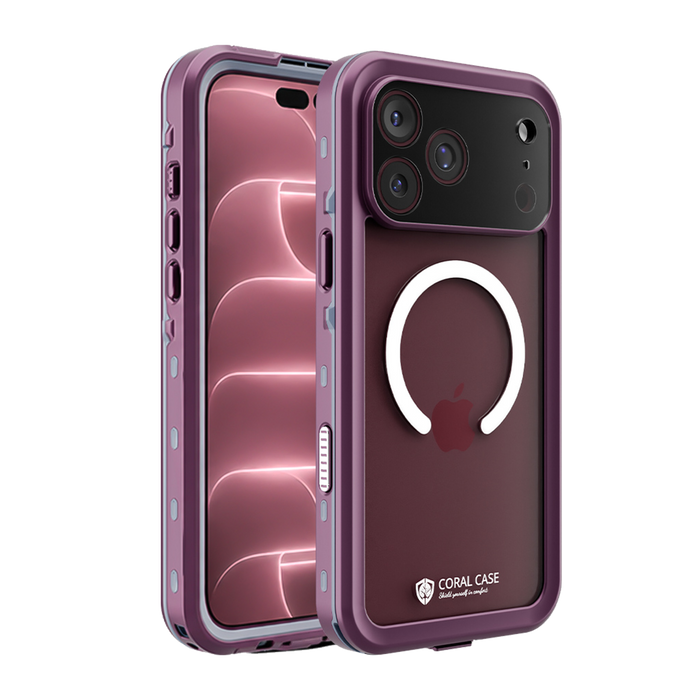
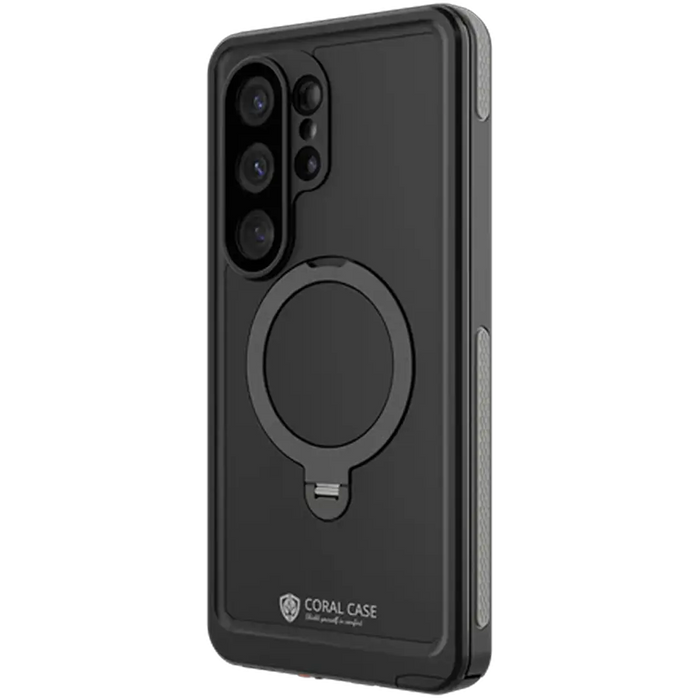
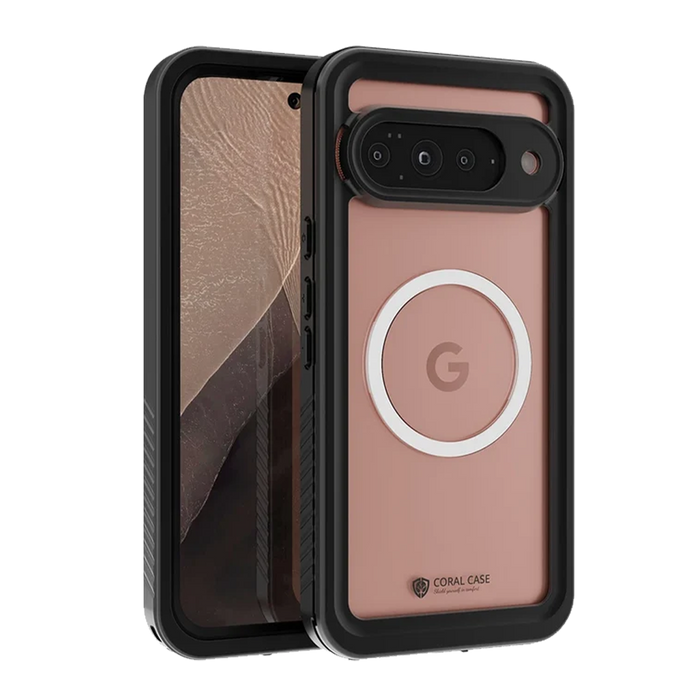
That is why camera protection should not be an afterthought on a premium foldable. A well-fitted iPhone Duo case with a raised camera edge can create a small buffer between the camera area and a flat surface while also helping protect the phone from everyday knocks.
Coral Case already has a dedicated iPhone Duo range for owners who want additional external protection without ignoring the Duo's folding construction.
Browse Coral Case iPhone Duo cases
iPhone Duo Camera Layout
The Duo's folding design makes camera placement more complex than it is on a conventional iPhone.
On the rear exterior are the 48MP Main and 48MP Ultra Wide cameras. The outer display has the 12MP Center Stage camera, while the large 7.6-inch folding display incorporates an under-display FaceTime camera. Apple lists the outside screen at 5.4 inches.
When the phone is closed, it can behave much like a conventional smartphone, with the exterior screen available for normal camera operation.
Open the device and the larger display provides considerably more screen area for reviewing photographs, editing media or working with content.
Partially fold it and the hinge becomes part of the photographic experience. The phone can support itself at certain angles, allowing hands-free capture without always requiring a separate stand.
The outer display can also work with the rear camera system as a live viewfinder. This arrangement is central to features such as Duo Preview and rear-camera selfies.
The important point is that Apple's camera layout is not simply “four cameras on a foldable”. Each position has been given a different role according to which screen and orientation you are using.
iPhone Duo Front Cameras Explained
12MP Outer Center Stage Camera
The primary front-facing camera on the outside is a 12MP Center Stage camera with an f/2.2 aperture.
It supports Retina Flash, Smart Take, Kid Cue, Photographic Styles 3, Centre Stage for photos, ultra-stabilised video, Dual Capture, Deep Fusion, the Photonic Engine, Smart HDR 5, Portrait mode, Night mode and other familiar iPhone imaging functions.
For video, it can record 4K Dolby Vision at up to 60 fps. Cinematic mode reaches 4K Dolby Vision at 30 fps, and 1080p slow-motion capture is supported at 120 fps.
Center Stage can adjust framing to help keep subjects positioned appropriately. That can be particularly useful for handheld video, group calls or situations where people move around the frame.
The significant comparison is with the iPhone 18 Pro. Apple's Pro models use an 18MP Center Stage front camera, giving them a higher stated front-camera resolution than the Duo's 12MP unit.
The Duo, however, has another option that a conventional Pro iPhone cannot reproduce in quite the same way: using the outer display to frame a selfie captured by the rear 48MP cameras.
Under-Display Inner FaceTime Camera
The inner camera has a very different purpose.
Rather than cutting a conspicuous camera opening into the main folding display, Apple places the camera underneath it. This helps preserve a less interrupted view across the large interior screen.
Apple specifies an f/1.8 aperture, 1080p video recording at 30 or 60 fps, Center Stage for video calls, ultra-stabilised video, lens correction and 1080p QuickTake.
What Apple does not disclose is its megapixel count. The company simply identifies it as the under-display FaceTime camera. Independent coverage has also noted the absence of an official resolution figure.
That is worth remembering when comparing specifications.
The inner unit appears designed primarily for FaceTime and convenient video communication while using the large display. Someone seeking the highest-quality selfie should instead consider the 12MP outer camera or, better yet, the 48MP rear-camera selfie option.
Taking Selfies With the Rear 48MP Cameras
This is where the foldable layout becomes genuinely useful rather than merely novel.
A conventional phone normally forces you to choose between looking at yourself on the front screen and using the technically superior rear cameras.
With the Duo, the outer display can provide a preview while the rear cameras point towards you.
That means you can frame yourself while using the 48MP Fusion Main camera instead of relying solely on the 12MP outer selfie camera.
For a single-person portrait, the Main camera can provide the more capable rear-camera imaging pipeline. For a large group, switching to the 48MP Ultra Wide can fit considerably more people into the frame.
Duo Preview extends the same idea when you are photographing somebody else. A live preview can appear on the outer display, so the subject gets an idea of framing and positioning before the shutter fires. Apple specifically highlights rear-camera selfies and dual-display previews as advantages unique to the Duo design.
For creators, families and travellers, this could prove more practically valuable than simply adding another lens.
iPhone Duo Zoom: How Far Can It Really Zoom?
Zoom specifications are one of the easiest areas to misunderstand.
The Duo gives you three useful reference points:
0.5x: 48MP Ultra Wide
1x: 48MP Fusion Main
2x: 12MP optical-quality crop from the Main camera
Apple describes the system as providing 2x optical-quality zoom in, 2x optical zoom out and a 4x optical-quality zoom range. Digital zoom extends to 10x for still photography.
The wording “optical-quality” matters.
At 2x, the Duo uses the centre of the high-resolution Main sensor to produce a 12MP image corresponding to roughly 52mm. Because the required pixels are available directly from the 48MP sensor, this can retain substantially more detail than simply enlarging a normal low-resolution image.
But the Duo does not have a physical telephoto camera.
Digital zoom beyond that point increasingly depends on cropping and computational processing. At 5x or 10x, the camera cannot create the same optical detail that would be available from a dedicated long-focal-length lens.
That makes the Duo less suited to users whose photography regularly involves distant wildlife, stage performances, field sports or subjects that cannot be approached physically.
Video digital zoom is also capped at 6x, according to Apple's specifications.
Foldable-Only iPhone Duo Camera Features
Duo Preview
Duo Preview sends a live camera preview to both displays.
If you are photographing another person, they can see themselves on the outer display while you compose from the other side. Instead of repeatedly asking “Does this look okay?”, your subject can adjust their pose or position before you take the photo.
It has obvious uses for portraits, couples, family photographs, group shots and content production.
It can also help when somebody else is filming you using your own phone because you can monitor the framing without standing behind the camera.
Smart Take
Smart Take addresses a familiar group-photo problem: somebody normally has to take the picture.
With the Duo partially folded and standing by itself, Smart Take can use on-device intelligence to determine when the group is ready and capture the image automatically.
That allows the phone owner to enter the frame without relying entirely on a conventional countdown timer.
It should not be interpreted as AI guaranteeing a perfect photograph. What it provides is a more intelligent trigger mechanism combined with the Duo's ability to stand at useful angles.
Kid Cue
Anyone who has tried photographing a small child knows that getting them to look towards the camera can be harder than getting the exposure right.
Kid Cue uses playful animations on the display to attract a child's attention towards the camera.
It is a simple feature, but it demonstrates how the second display can solve practical photography problems rather than merely duplicating what's on the main screen.
Self-Standing, Tripod-Style Shooting
The hinge lets the phone remain partially open at different angles, effectively providing a built-in support position for certain shots.
That does not make the iPhone Duo a substitute for a professional tripod. A proper tripod offers greater height, stability and positioning freedom.
But for a group photo on a table, a FaceTime call at a desk, a time-lapse, a static talking-head clip or a quick hands-free selfie, not having to carry a separate stand could be extremely convenient.
Apple specifically supports stabilised time-lapse recording at up to 4K Dolby Vision, making the self-standing design especially relevant to longer captures.
Dual Capture
Dual Capture records using front and rear cameras at the same time, at up to 4K Dolby Vision at 30 fps.
A traveller could record the scenery while simultaneously capturing their reaction. A creator could speak to the audience while demonstrating a product or visiting an event. Parents could film an activity and their own response within the same recording workflow.
It should not be confused with Duo Preview. Preview is about showing a live view on the second screen; Dual Capture actually records front and rear perspectives simultaneously.
iPhone Duo Video Camera Features
The Duo is considerably more capable for video than its two-lens rear design might suggest.
The Fusion Main supports 4K Dolby Vision at 24, 25, 30, 60, 100 and 120 fps. There is also 1080p Dolby Vision up to 120 fps through the Main camera and 720p Dolby Vision at 30 fps.
Cinematic mode reaches 4K Dolby Vision at 60 fps, and Apple allows Cinematic effects to be applied after capture. Action mode supports up to 2.8K Dolby Vision at 60 fps.
Slow-motion options include 1080p up to 240 fps and 4K Dolby Vision up to 120 fps through the Fusion Main camera.
Macro video, macro slow motion and macro time-lapse are supported through the Ultra Wide system.
There is also stabilised time-lapse recording up to 4K Dolby Vision, Night mode time-lapse, QuickTake up to 4K Dolby Vision at 60 fps and sensor-shift optical stabilisation on the Main camera.
For sound, Apple includes audio zoom, Spatial Audio recording, stereo recording, wind-noise reduction and Audio Mix.
You can also capture an 8MP still image while recording 4K video.
Recorded standard video formats are HEVC and H.264.
For everyday users, the headline is not the complete list of codecs and frame rates. It is flexibility. You can shoot ordinary 4K footage, high-frame-rate action, stabilised walking clips, cinematic footage, macro clips, time-lapses or simultaneous front-and-rear video without requiring specialist software.
Smart Focus Tracking and Computational Photography
Modern phone cameras cannot be understood by looking at lenses alone.
The iPhone Duo uses Apple's A20 Pro chip, which includes Neural Accelerators and a dual 16-core Neural Engine. That processing hardware contributes to camera features that analyse subjects, combine image data and optimise results in real time.
Smart focus tracking is one example.
The system can follow a subject while recording and reacquire it if it leaves the frame and returns. That can be helpful for children, pets, sports practice or creators moving around during a recording.
Deep Fusion works deeper in the image-processing pipeline to optimise detail and texture, while Smart HDR manages difficult scenes containing both bright and dark areas.
The Photonic Engine contributes to low- and mid-light image processing.
Photographic Styles 3 goes beyond basic colour filters. Apple now includes controls relating to texture and grain, allowing users to establish more of a consistent visual character while retaining underlying image information.
The important distinction is that none of this replaces the physical camera.
Software cannot magically create the same optical data as a missing long telephoto lens. Instead, computational photography attempts to extract the best possible result from the light and detail the hardware actually captures.
iPhone Duo Camera Quality: What Should You Expect?
Because the iPhone Duo has only recently been announced and has not yet accumulated months of independent testing, any responsible assessment of image quality needs to distinguish expected performance from measured performance.
On paper, the Main camera has several ingredients associated with good everyday results: 48MP capture, an f/1.6 aperture, sensor-shift stabilisation and Apple's established computational pipeline.
In bright daylight, the 24MP default should provide plenty of resolution for everyday photography while allowing 48MP capture when extra detail is required.
For landscapes and architecture, the 48MP Ultra Wide offers a useful combination of broad framing and significantly higher resolution than older-generation Ultra Wide systems.
Indoor scenes should favour the Main camera because its f/1.6 aperture can collect more light than the f/2.2 Ultra Wide.
The same applies at night. Apple's Night mode and computational processing can help both cameras, but physics still matters, and the Main camera is likely to be the preferred choice when light becomes scarce.
For portraits, the 26mm Main camera works for environmental portraits, while the 2x 52mm-equivalent crop can provide a tighter perspective that is often more flattering for faces.
Children and pets may benefit from Smart focus tracking and the ability to quickly capture movement. Kid Cue adds a practical advantage when the challenge is getting a child to look towards the camera in the first place.
For food, products and fine details, macro capability adds another useful option.
Social-media creators have an especially interesting setup. The Duo combines high-quality rear-camera selfies, a self-standing hinge, Dual Capture and an outer preview screen — features that address workflow as much as raw image quality.
How Does the Foldable Design Improve Photography?
Most smartphone-camera upgrades are discussed in terms of sensors and lenses. The Duo's biggest upgrade may instead be how the phone can physically be positioned.
A conventional iPhone needs to be held, leaned against something or attached to a stand for hands-free capture.
The Duo can partially fold and support itself.
That opens up lower-angle shots, desk videos, group photographs, time-lapses and FaceTime calls without immediately reaching for another accessory.
The outer display also solves the traditional rear-camera selfie problem. Instead of guessing your framing while pointing the best cameras towards yourself, you can see the composition.
Likewise, Duo Preview lets the subject monitor the shot.
These features may sound less impressive on a spec sheet than an enormous megapixel count, but they can have a greater effect on how often people successfully capture the picture they actually wanted.
What Can the iPhone Duo Camera Do?
The iPhone Duo can capture high-resolution 48MP photographs through both its Main and Ultra Wide cameras, while providing a practical 24MP everyday output.
It covers 0.5x Ultra Wide, 1x Main and 2x optical-quality perspectives.
It supports macro photography, Night mode, portraits with Focus and Depth Control, Photographic Styles 3 and up to 10x digital zoom.
For video, it can record 4K Dolby Vision up to 120 fps on the Main camera, Cinematic mode up to 4K Dolby Vision at 60 fps, Action mode, macro footage, slow motion and stabilised 4K time-lapse.
Dual Capture can simultaneously record front and rear perspectives.
The Duo's physical design adds capabilities that conventional iPhones cannot duplicate in the same way: rear-camera selfies with an outer-screen viewfinder, Duo Preview, self-standing hands-free photography, Smart Take and Kid Cue.
The outer Center Stage camera handles normal selfies and high-quality video calls, while the under-display inner camera keeps FaceTime available when using the large folding screen.
In short, the Duo is not simply a phone containing cameras. Apple has tried to make the folding hardware part of the camera system itself.
What Can't the iPhone Duo Camera Do?
The biggest omission is straightforward: there is no dedicated telephoto rear camera.
Apple's 2x optical-quality option is useful, but it cannot provide the same long-distance optical reach as the dedicated 48MP Fusion Telephoto fitted to the iPhone 18 Pro.
The Duo also lacks several photography and filmmaking features Apple reserves for its Pro models.
Comparing Apple's specifications for the two phones shows that the iPhone 18 Pro adds a variable-aperture Main camera, dedicated 48MP telephoto hardware, Pro controls, Apple Reference Image support, second-generation sensor-shift stabilisation and professional recording options such as ProRes, ProRes RAW, Apple Log 2 and genlock. The Pro model also supports spatial video and uses a four-microphone studio-quality array.
MacRumors' post-announcement comparison similarly identifies the absence of ProRAW, ProRes, variable aperture, a dedicated telephoto camera, Adaptive True Tone flash and various Pro controls from the Duo.
How much should that matter?
For someone taking family pictures, holiday photos, social clips and everyday videos, ProRes RAW or genlock may have virtually no effect on the experience.
For a filmmaker building a multi-camera production workflow, they can be significant.
The telephoto limitation is more relevant to ordinary users. You do not need to be a professional to want a close shot of a football player, bird, concert performer or landmark across a harbour.
So the most meaningful compromise is not the absence of highly specialised professional codecs. It is the Duo's relatively limited optical reach.
iPhone Duo Camera vs iPhone 18 Pro Camera
The Duo and iPhone 18 Pro approach photography from different directions.
The Duo uses two 48MP rear cameras: Main and Ultra Wide.
The iPhone 18 Pro uses three 48MP rear cameras: Main, Ultra Wide and Telephoto. Its Main camera also has a variable aperture, with f/1.48, f/1.8, f/2.8 and f/4.0 settings. Apple lists optical-quality zoom reaching 8x through the Pro camera system.
The Pro therefore offers substantially greater optical flexibility and deeper manual/professional control.
Its 18MP Center Stage front camera also has a higher stated resolution than the Duo's 12MP outer camera.
The Duo answers with capabilities created by its shape.
Its rear camera can be used for properly framed selfies with the outer display. Duo Preview lets subjects monitor the image. Smart Take takes advantage of the self-standing hinge. FaceTime can make use of both displays, and the device can sit partially folded for recording without an external stand.
Neither design advantage makes the missing telephoto irrelevant, and the extra Pro lenses do not reproduce the Duo's folding workflow.
The sensible comparison therefore depends on what kind of photography matters to you.
The iPhone 18 Pro offers more specialised camera hardware, longer zoom reach and more professional controls.
The iPhone Duo emphasises flexible positioning, dual-screen framing and new ways of using high-quality cameras for selfies, groups and hands-free content.
Is the iPhone Duo Camera Good for Content Creators?
For mainstream content creation, the Duo has an unusual set of advantages.
Someone recording TikTok videos, Instagram Reels or YouTube Shorts can partially fold the phone and place it on a stable surface rather than immediately setting up a tripod.
Rear-camera selfies allow creators to use the 48MP Main or Ultra Wide while still seeing themselves on the outer display.
That is particularly useful for talking-head content, travel videos, demonstrations and product footage where the creator works alone.
Dual Capture adds another option by recording the creator and what they are looking at simultaneously.
The large inner display may also prove useful for reviewing clips, sorting media and working in editing apps because it provides much more visual space than a standard phone screen.
For casual and semi-professional creation, those workflow advantages are meaningful.
Advanced filmmakers need to consider the omissions.
The Duo does not provide the full professional video toolkit of the iPhone 18 Pro, including ProRes RAW, Apple Log 2, genlock and the Pro model's broader camera and microphone hardware.
If your workflow involves extensive colour grading, external recording or synchronised multicamera production, the Pro remains the more specialised tool.
If your priority is fast social content, self-recording and flexibility without extra equipment, the Duo's folding design presents a very different proposition.
Protecting the iPhone Duo Camera
Foldable phones introduce more moving parts and exposed surfaces than conventional devices, and the camera lenses remain one of the areas most likely to meet a hard surface.
Even Apple's sapphire crystal lens cover does not eliminate the value of physical spacing around the camera area.
A protective case with a correctly positioned raised camera bezel can help prevent the lenses from sitting directly against desks and other flat surfaces. Impact-absorbing construction can also add protection around the phone's exterior during an accidental drop.
For a foldable device, fit matters particularly around the hinge, camera module, controls and both halves of the phone. A poorly designed case can interfere with movement or add unnecessary bulk.
Coral Case's current Australian iPhone Duo collection includes protective MagSafe-compatible options designed specifically around the foldable model rather than adapting a conventional slab-phone case.
Final Verdict on the iPhone Duo Camera
The iPhone Duo camera is interesting because its biggest improvements are not limited to megapixels.
Its core hardware is strong: a 48MP Fusion Main, 48MP Fusion Ultra Wide, 48MP macro capability, optical-quality 2x shooting, advanced computational photography and video reaching 4K Dolby Vision at 120 fps.
The obvious hardware compromise is the absence of a dedicated telephoto lens. Photographers who frequently shoot distant subjects will have far less optical reach than they would with the iPhone 18 Pro. Professional users also lose features including ProRAW, ProRes-family workflows, variable aperture and several specialised video controls.
Yet focusing only on what is missing overlooks what makes the Duo distinctive.
You can stand the phone up for hands-free shots. You can frame yourself while using the rear cameras. A portrait subject can monitor their own framing. Smart Take can bring the photographer into the group, while Kid Cue uses the second screen to solve a very ordinary family-photography problem.
Those are not improvements that can be expressed simply by adding another megapixel figure to a specification table.
For everyday photography, travel, families, vloggers and social creators, the Duo's greatest camera advantage may be that the foldable body makes existing camera hardware easier to use in situations where a conventional phone normally needs another person, a tripod or a degree of guesswork.
For long-range photography or high-end professional filmmaking, the iPhone 18 Pro remains considerably more specialised.
Ultimately, the Duo offers a different interpretation of a flagship iPhone camera: fewer dedicated rear lenses than Apple's Pro model, but more ways to position, preview and use the cameras it has.
Frequently Asked Questions
How many megapixels is the iPhone Duo camera?
The iPhone Duo has two 48MP rear cameras: a 48MP Fusion Main and a 48MP Fusion Ultra Wide. The outer front camera is a 12MP Center Stage camera. Apple has not published a megapixel figure for the under-display inner FaceTime camera. The Main camera normally saves 24MP photographs but can also capture at 48MP.
Does the iPhone Duo have a telephoto camera?
The iPhone Duo does not have a separate physical telephoto rear camera. Its 48MP Fusion Main camera enables a 12MP, 52mm-equivalent 2x optical-quality view by using the centre portion of the high-resolution sensor. That provides useful 2x framing, but it should not be confused with the dedicated long-range telephoto camera found on the iPhone 18 Pro.
How much can the iPhone Duo camera zoom?
The iPhone Duo offers 0.5x through its Ultra Wide camera, 1x through the Main camera and 2x optical-quality shooting from the Main sensor. Apple describes this as a 4x optical-quality range from 0.5x to 2x. Still-photo digital zoom reaches 10x, while video digital zoom reaches 6x.
Can you take selfies with the iPhone Duo rear camera?
Yes. One of the major advantages of the foldable design is the ability to use the outer display as a viewfinder while taking selfies with the 48MP rear cameras. This lets you use the Main camera for higher-quality self-portraits or switch to the Ultra Wide when you need a broader group composition.
Is the iPhone Duo camera better than the iPhone 18 Pro camera?
They prioritise different capabilities. The iPhone 18 Pro has a more extensive camera system with a dedicated 48MP telephoto camera, longer zoom, variable aperture, an 18MP front camera and professional photography and video controls. The iPhone Duo instead offers foldable-specific advantages such as rear-camera selfies with live framing, Duo Preview, Smart Take and self-standing hands-free shooting. The more suitable system depends on whether you value advanced optics and professional controls or the Duo's flexible dual-screen photography experience.


